


To determine how big your oil tank is, measure its dimensions: for rectangular tanks, use length × width × height; for cylindrical tanks, use π × radius² × length. Convert cubic metres to litres by multiplying by 1,000. Typical UK domestic tanks range from 500 litres to over 3,500 litres, depending on household size and heating demand. Ensure the tank is well-maintained, compliant with OFTEC regulations, and properly sized for your boiler. Using reputable suppliers like 123 Oil can help ensure safe fuel management and reliable delivery.
For many households in the UK, heating oil is an essential source of warmth and hot water. Whether you live in a rural area or in a home off the gas grid, oil tanks play a critical role in ensuring that your boiler has a steady supply of fuel. Understanding the size of your oil tank is important for planning refills, managing costs, ensuring compliance with safety regulations, and maintaining your heating system efficiently.
Many homeowners are unsure of their oil tank’s capacity, how to measure it, or whether it is suitable for their household needs. This comprehensive guide explores how to determine your oil tank’s size, factors that affect tank capacity, typical domestic oil tank sizes, and practical tips for managing your oil supply safely and efficiently.
Why Knowing Your Oil Tank Size Matters
Understanding your oil tank’s capacity offers several advantages:
- Fuel planning – helps estimate how long the tank will last and when to schedule refills
- Cost management – allows homeowners to budget for fuel purchases efficiently
- Compliance and safety – ensures the tank meets OFTEC and building regulations
- Boiler compatibility – ensures a consistent fuel supply to avoid boiler downtime
- Environmental protection – prevents overfilling and reduces the risk of spills
Knowing the size of your tank lets you optimise heating efficiency and minimise the risk of running out of oil during cold months.
Typical Domestic Oil Tank Sizes in the UK
Domestic oil tanks vary in size depending on household demand, available space, and the type of tank installed. Common options include:
- Small tanks – 500 to 1,000 litres, suitable for small homes or infrequent oil usage
- Medium tanks – 1,000 to 2,500 litres, common for average-sized homes
- Large tanks – 2,500 to 3,500 litres, used for larger properties or homes with high heating demand
- Extra-large tanks – over 3,500 litres, often found in farms, commercial properties, or large estates
The type of tank, plastic, steel, or bunded (double-skinned), can also influence the total usable capacity. Bunded tanks have an inner and outer layer, which provides extra protection but slightly reduces internal storage compared to single-skin tanks.
How to Measure Your Oil Tank Capacity
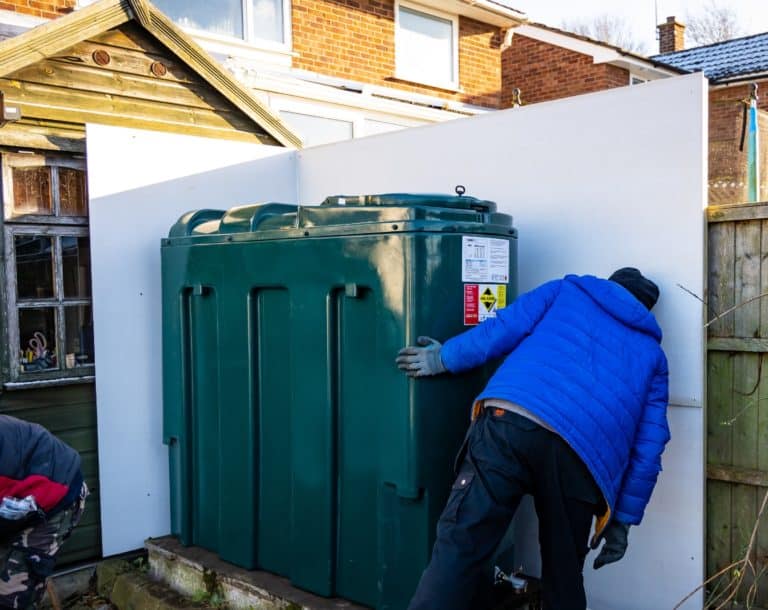
If your tank does not have a label specifying its size, you can estimate its capacity by measuring it. The process varies slightly depending on tank shape:
Rectangular or Cuboid Tanks
- Measure length, width, and height in metres
- Multiply the three dimensions to get the volume in cubic metres
- Convert cubic metres to litres by multiplying by 1,000
Example:
A tank measuring 2m (length) × 1m (width) × 1.2m (height) has a volume of 2 × 1 × 1.2 = 2.4 cubic metres → 2,400 litres
Cylindrical Tanks
- Measure length and diameter
- Use the formula: Volume = π × radius² × length
- Convert cubic metres to litres by multiplying by 1,000
Example:
A tank with a diameter of 1m (radius 0.5m) and a length of 3m:
Volume = 3.1416 × 0.5² × 3 = 2.356 m³ → 2,356 litres
Tips for Accuracy
- Measure the internal dimensions if possible, as external walls reduce actual capacity
- Take note of sloping roofs or rounded tops on plastic tanks, which may slightly reduce volume
- Check for manufacturer’s labels or model numbers, which often specify exact capacity
Factors Affecting Usable Oil Tank Capacity
Although a tank may be rated for a certain volume, the usable capacity is often slightly less due to safety and operational considerations:
- Air space at the top – usually 5–10% of the total capacity to allow for expansion
- Sediment accumulation – over time, sludge may occupy a small portion of the tank
- Pipework placement – internal fittings and draw-off points slightly reduce effective storage
Being aware of these factors helps in estimating how much oil is actually available for use.
How to determine if Your Tank is the Right Size
Choosing the right tank size depends on household heating demand, property size, and delivery frequency:
- Small households or flats – 500–1,000 litres may suffice, requiring more frequent deliveries
- Average family homes – 1,000–2,500 litres balance storage and refill convenience
- Large homes or properties with high heating needs – 2,500–3,500 litres reduces the frequency of deliveries
- Remote or rural properties – larger tanks are practical to avoid frequent long-distance deliveries
Consulting your oil supplier or heating engineer can help determine the ideal tank size for your specific needs.
Legal and Safety Considerations
UK regulations require that oil tanks meet certain safety and placement standards:
- OFTEC standards – cover tank installation, maintenance, and safety
- Bunded tanks – recommended to prevent leaks and protect the environment
- Safe distances – tanks must be a minimum distance from buildings, boundaries, drains, and watercourses
- Inspection and maintenance – regular checks for corrosion, damage, and leaks are mandatory
Ensuring your tank is compliant not only protects your home but also validates insurance coverage in the event of accidents or spills.
Tips for Managing Your Oil Supply Efficiently
Proper management of your oil tank ensures uninterrupted heating and cost savings:
- Monitor fuel levels regularly – don’t wait until the tank is almost empty
- Keep track of consumption patterns – seasonal demand may vary
- Plan deliveries strategically – avoid peak price periods when possible
- Maintain the tank and fittings – clean filters, check valves, and inspect for leaks
- Consider smart monitoring systems – sensors can alert you when fuel levels are low
By actively managing your oil tank, you can avoid the inconvenience of running out of fuel and improve overall heating efficiency.
Environmental Considerations
Oil tanks can pose environmental risks if not maintained properly:
- Leaks or spills – contaminate soil and groundwater
- Overfilling – increases the risk of accidental spills during delivery
- Old tanks – particularly single-skin or degraded plastic tanks- are more prone to leaks
Modern bunded tanks and proper maintenance reduce these risks. Using reputable suppliers like 123 Oil ensures fuel is delivered safely and tanks are checked for compliance.
When to Consider Replacing Your Oil Tank
Even if your tank is still functional, certain situations may warrant a replacement:
- Age and wear – plastic tanks generally last 15–20 years
- Visible cracks or warping – indicate potential leaks
- Non-compliance – older tanks may not meet current OFTEC or environmental standards
- Capacity issues – upgrading to a larger tank can reduce delivery frequency
Replacing an outdated or undersized tank during boiler upgrades or property renovations ensures efficiency and safety.
Conclusion
Knowing the size of your oil tank is crucial for UK homeowners to manage fuel efficiently, maintain safe heating, and comply with regulations. By accurately measuring the tank, understanding its usable capacity, and selecting the right size for your household needs, you can ensure a reliable and cost-effective oil supply. Regular monitoring, proper maintenance, and the use of reputable suppliers like 123 Oil will further enhance safety, protect the environment, and ensure peace of mind throughout the year.
Whether you are assessing your existing tank, planning refills, or considering a replacement, understanding your oil tank’s size is a key component of effective home heating management.
Frequently Asked Questions
Measure the length, width, and height of rectangular tanks, or the diameter and length of cylindrical tanks, then calculate the volume in litres.
Common sizes range from 500 litres for small homes to 2,500–3,500 litres for larger properties or high heating demand.
Yes, a properly sized tank ensures a steady fuel supply, reducing boiler downtime and allowing efficient heating.
Always leave 5–10% of capacity as air space to allow for expansion and avoid overfilling.
Yes, if your tank is too small for your household's needs, a larger or bunded tank can reduce refill frequency and improve convenience.