

Oil is made into gas by refining crude oil in a refinery. The crude oil is heated and separated through fractional distillation, where lighter fuel fractions are collected. Heavier oil fractions can then be broken down through cracking to create more petrol-like fuel. The fuel is then treated, blended and tested before it is supplied for vehicles, machinery and other uses.
Many people use petrol every day without really thinking about where it comes from. You fill up the car, start the engine, and drive away as if fuel simply appeared by magic. Sadly, no tiny underground fuel fairies are involved. Gas, or petrol as it is commonly called in the UK, starts its life as crude oil buried deep beneath the Earth.
The journey from thick, dark crude oil to the clear liquid used in vehicles is surprisingly complex. Crude oil cannot be poured straight into a car. It contains a mixture of hundreds of different hydrocarbons, impurities, gases, heavy oils, waxes, and other materials. Refineries must separate, clean, convert, and blend these substances before they become usable fuel.
This guide explains how oil is made into gas in a clear, detailed, and practical way. We will look at where crude oil comes from, how refining works, what fractional distillation does, why cracking is needed, and how petrol is finally tested before it reaches drivers.
What Is Crude Oil?
Crude oil is a natural fossil fuel formed over millions of years from the remains of ancient marine plants, algae, and tiny organisms. These remains were buried under layers of mud, sand, and rock. Over time, heat and pressure transformed them into liquid hydrocarbons.
Crude oil is not a single substance. It is a mixture of different hydrocarbon molecules. Some are light and evaporate easily, while others are thick, heavy, and dense. This is why crude oil has to be refined before it can be used.
Different types of crude oil vary in quality. Some are light and sweet, meaning they contain more valuable light hydrocarbons and less Sulphur. Others are heavy and sour, meaning they are thicker and contain more impurities. The type of crude oil used can affect how much petrol, diesel, jet fuel, heating oil, and other products can be made from it.
A modern refinery is designed to process crude oil into many useful products, including petrol, diesel, lubricants, bitumen, kerosene, and industrial fuels. 123 Oil operate in a fuel supply industry that depends on these refined products reaching homes, businesses, farms, construction sites, and transport users safely and reliably.
Is Gas the Same as Petrol?
In the UK, the fuel used in most standard cars is called petrol. In the United States and some other countries, it is commonly called gas or gasoline. So, when people ask how oil is made into gas, they usually mean how crude oil is turned into petrol.
This is different from natural gas, which is mainly methane and is often used for heating, cooking, and electricity generation. Natural gas can also come from underground reserves, but it is not the same product as petrol.
Petrol is a liquid fuel made mostly from lighter hydrocarbon molecules found in crude oil. It is designed to ignite quickly inside an engine, creating controlled explosions that move the pistons and power the vehicle. Another charming example of civilisation depending on tiny explosions to get to the supermarket.
Step 1: Extracting Crude Oil from the Ground
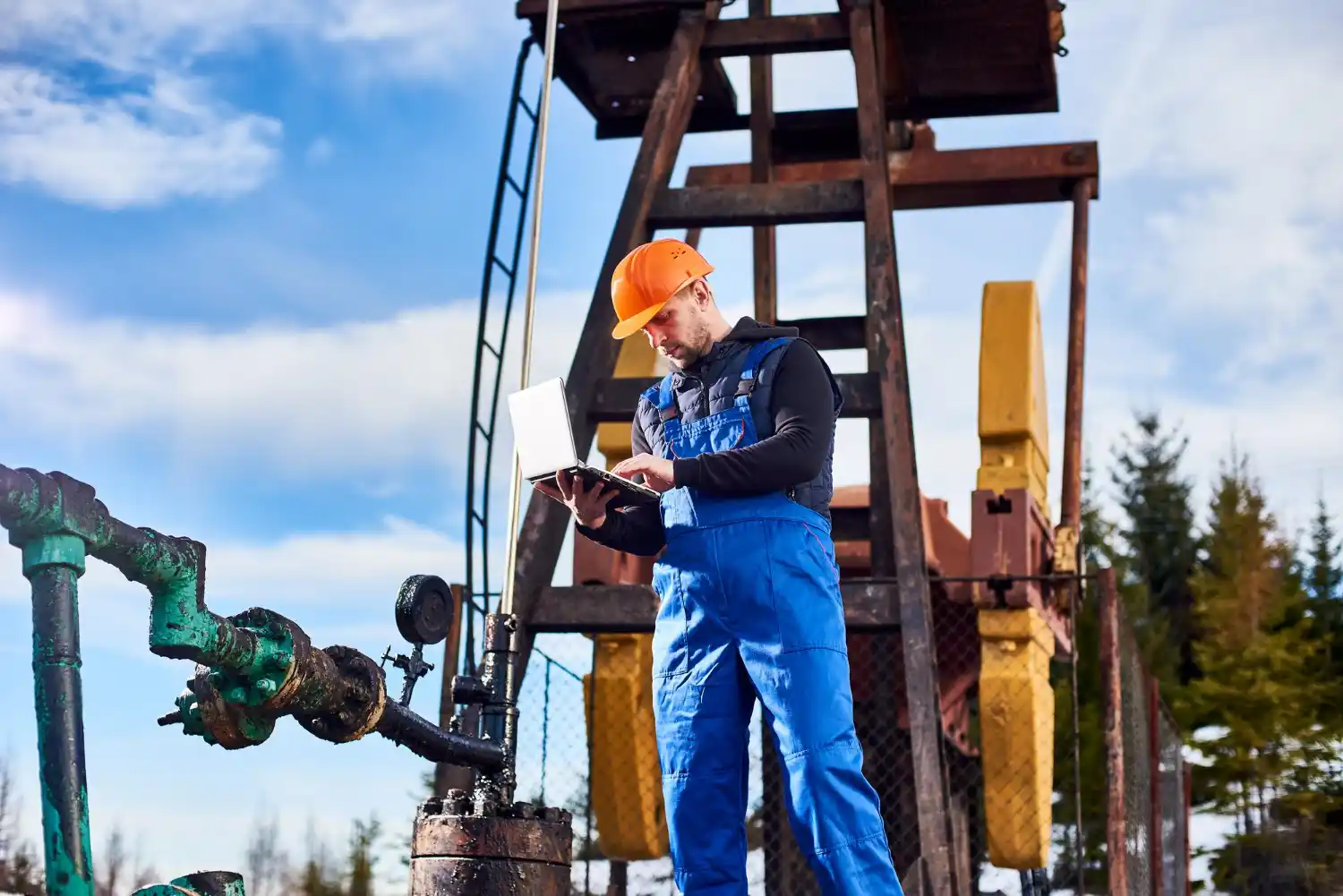
The process begins with exploration. Geologists and engineers study underground rock formations to find possible oil reserves. Once a suitable site is confirmed, drilling equipment is used to reach the oil-bearing rock.
Crude oil may be found under land or beneath the seabed. After a well is drilled, pressure inside the reservoir often helps push the oil towards the surface. In other cases, pumps or enhanced recovery methods are needed to bring the oil up.
Once extracted, crude oil is transported to refineries. This can happen through pipelines, ships, rail, or road tankers. Before refining begins, the crude oil may be stored in large tanks and tested to understand its density, Sulphur level, water content, and overall composition.
Step 2: Preparing Crude Oil for Refining
Before crude oil enters the main refining process, it must be prepared. Raw crude usually contains water, salts, sand, metals, and other unwanted materials. These impurities can damage refinery equipment and reduce product quality.
One of the first preparation steps is desalting. In this process, crude oil is mixed with water so salts and other water-soluble impurities can be removed. The mixture is then separated, leaving cleaner crude oil ready for heating.
Removing impurities at this stage is important because refineries operate at very high temperatures. If salts and metals remain in the crude oil, they can cause corrosion, blockages, and equipment failure. Refining is already complicated enough without turning pipes into expensive metal soup.
Step 3: Heating the Crude Oil
After preparation, the crude oil is heated in a furnace. It is usually heated to around 350°C to 400°C, depending on the refinery process and crude type. At this temperature, much of the crude oil turns into vapour.
This heated mixture of vapour and liquid then enters a tall structure called a fractionating column or distillation tower. This is where the first major separation takes place.
The idea is simple: different hydrocarbons boil at different temperatures. Lighter hydrocarbons rise higher in the column, while heavier hydrocarbons remain lower down. The refinery uses this difference to separate crude oil into useful fractions.
Step 4: Fractional Distillation
Fractional distillation is the key process that separates crude oil into different parts. The fractionating column is hot at the bottom and cooler at the top. As vapours rise through the column, they cool and condense at different levels.
Light gases rise to the very top. Petrol vapours condense near the upper section because they have relatively low boiling points. Kerosene, diesel, gas oil, lubricating oils, and heavier fuels condense lower down. The thickest residues remain at the bottom and may be used for bitumen or further processing.
This process does not “create” petrol from nothing. Instead, it separates the petrol-range molecules already present in crude oil. However, crude oil does not naturally contain enough petrol to meet demand, so refineries use additional processes to convert heavier molecules into lighter ones.
This is where cracking comes in.
Step 5: Cracking Heavy Hydrocarbons
Cracking is a refining process that breaks large hydrocarbon molecules into smaller, more useful ones. Heavy fractions from crude oil are valuable, but they are often too thick or slow-burning for petrol engines. By cracking them, refineries can produce more petrol and other lighter fuels.
There are several types of cracking. Thermal cracking uses heat and pressure to break molecules apart. Catalytic cracking uses a catalyst to speed up the reaction and produce higher-quality fuel. Hydrocracking uses hydrogen along with heat, pressure, and catalysts to create cleaner fuel products.
Cracking is one of the reasons modern refineries can produce large volumes of petrol from crude oil. Without cracking, much more of the crude would remain as heavy fuel oil or low-value residue.
Step 6: Reforming to Improve Fuel Quality
After distillation and cracking, some petrol components still need improvement. Petrol must burn smoothly inside an engine. If it ignites too early or unevenly, it can cause engine knocking, poor performance, and possible damage.
Reforming changes the structure of hydrocarbon molecules to improve the octane rating of petrol. Octane rating measures how well fuel resists knocking. Higher-octane petrol is more stable under pressure and is often used in higher-performance engines.
Catalytic reforming is commonly used to rearrange hydrocarbon molecules into forms that burn more efficiently. This process also produces hydrogen, which can be used elsewhere in the refinery.
Step 7: Treating and Removing Impurities
Fuel must meet strict quality standards before it can be sold. Refinery streams often contain Sulphur, nitrogen compounds, metals, and other impurities. These need to be removed or reduced.
One important process is hydrotreating. This uses hydrogen and catalysts to remove Sulphur and other unwanted compounds. Reducing Sulphur is important because Sulphur emissions contribute to air pollution and can damage engines and exhaust systems.
Treatment also helps improve fuel stability, smell, colour, and environmental performance. Modern fuels are much cleaner than older fuels because regulations have pushed refineries to reduce harmful components.
Step 8: Blending Petrol
Petrol is not usually one single refinery stream. It is made by blending several different components together. Each component has different properties, such as volatility, octane rating, energy content, and emissions behaviour.
Blending allows refineries to create petrol that meets legal, seasonal, and performance requirements. For example, winter petrol may need to evaporate more easily to help engines start in cold weather. Summer petrol may need lower volatility to reduce vapour emissions.
Additives may also be included. These can help clean engines, prevent corrosion, improve stability, and reduce deposits. The final blend must be carefully tested before it leaves the refinery.
Step 9: Testing the Finished Petrol
Before petrol is distributed, it goes through quality testing. Refineries check properties such as octane rating, vapour pressure, Sulphur content, density, distillation range, and contamination levels.
These tests make sure the fuel meets national standards and performs safely in vehicles. Poor-quality petrol can cause engine problems, higher emissions, poor fuel economy, and customer complaints. Since nobody enjoys paying for fuel only to make their car cough like an elderly lawnmower, testing matters.
Once approved, the petrol is stored in tanks and moved through the fuel distribution network.
Step 10: Transporting Petrol to Fuel Stations
After petrol is refined and tested, it is transported from refineries or storage terminals to fuel stations. This usually happens by pipeline, tanker ship, rail, or road tanker.
At terminals, petrol may be blended with final additives before being loaded into delivery tankers. Tankers then deliver it to petrol stations, where it is stored in underground tanks until customers pump it into their vehicles.
The distribution chain must be carefully managed because petrol is flammable and must be handled safely. Storage tanks, transport vehicles, and filling stations all follow strict safety rules.
What Other Products Come from Crude Oil?
Petrol is only one of many products made from crude oil. Refineries are designed to produce a wide range of fuels and materials. These include diesel, jet fuel, heating oil, lubricants, asphalt, marine fuel, petrochemical feedstocks, and industrial oils.
Diesel is heavier than petrol and is commonly used in commercial vehicles, agricultural machinery, generators, and industrial equipment. Red Diesel is a rebated fuel used for specific off-road purposes in sectors such as agriculture, construction, and certain commercial operations were permitted by UK rules.
Lubricating oils are another important refinery product. These oils reduce friction, protect machinery, control heat, and help equipment operate smoothly. Businesses often rely on Hydraulic Oil Suppliers to provide specialist oils for machinery, lifting systems, plant equipment, and industrial applications.
Kerosene is also produced from crude oil and is used in heating, aviation, and some industrial processes. Many rural homes and commercial sites rely on Kerosene Oil Suppliers because they are not connected to the mains gas grid and need dependable fuel for heating systems.
Heating oil is another important fuel made from crude oil fractions. During winter or periods of high demand, Emergency Heating Oil Delivery can be essential for homes, farms, and businesses that run low unexpectedly and need fast supply to keep heating systems working.
Why Can’t Crude Oil Be Used Directly as Fuel?
Crude oil is too unstable, dirty, and inconsistent to be used directly in most engines. It contains many different hydrocarbons with different boiling points and burning properties. It may also contain Sulphur, salts, metals, water, and solid particles.
Using crude oil directly would damage engines, create heavy pollution, and perform very poorly. Engines are designed to run on specific fuels with controlled properties. Petrol engines need a fuel that vaporises easily, ignites correctly, and burns smoothly.
Refining turns crude oil into predictable, usable products. It separates useful fractions, removes harmful impurities, improves performance, and creates fuels that meet safety and environmental standards.
How Much Petrol Can Be Made from a Barrel of Oil?
A standard barrel of crude oil contains 42 US gallons, which is about 159 litres. The amount of petrol produced from one barrel depends on the type of crude oil and the refinery setup.
Modern refineries can produce a large percentage of petrol by using distillation, cracking, reforming, and blending. However, one barrel does not become only petrol. It is split into multiple products, including diesel, jet fuel, liquefied petroleum gases, heating oil, lubricants, and asphalt.
Refineries aim to maximise valuable products depending on market demand. If demand for petrol is high, they may adjust operations to increase petrol production where possible.
What Is the Role of Hydrocarbons?
Hydrocarbons are molecules made of hydrogen and carbon atoms. They are the main chemical building blocks of crude oil and refined fuels. The size and structure of hydrocarbon molecules determine how they behave.
Small hydrocarbons tend to be gases. Medium-sized hydrocarbons are often used for petrol, kerosene, and diesel. Large hydrocarbons are thicker and may become lubricants, waxes, or bitumen.
Petrol contains hydrocarbons in a specific size range. These molecules vaporise easily and burn quickly, making them suitable for spark-ignition engines. Refining processes are designed to separate and reshape hydrocarbons so they meet the needs of different fuels.
Why Does Petrol Need an Octane Rating?
Octane rating is one of the most important measures of petrol quality. It tells you how resistant the fuel is to knocking. Knocking happens when fuel ignites too early or unevenly inside the engine.
Low-octane petrol can cause poor performance, especially in engines with higher compression ratios. Higher-octane petrol is more resistant to premature ignition and is suitable for engines that require it.
Refineries improve octane through reforming, blending, and additives. The right octane level helps engines run smoothly, efficiently, and safely.
Is Making Petrol Bad for the Environment?
Refining crude oil has environmental impacts. It uses energy, produces emissions, and creates waste products that must be carefully controlled. Burning petrol in vehicles also releases carbon dioxide and other pollutants.
Modern refineries use cleaner technology and stricter controls to reduce emissions. Fuel standards have also improved over time, especially with lower sulphur levels and better fuel formulations.
However, petrol remains a fossil fuel. This is why many countries are investing in cleaner transport, electric vehicles, renewable energy, and lower-carbon fuels. The refining industry is also under pressure to reduce its environmental footprint.
The Full Journey from Oil to Gas
The process of making oil into gas can be summarised in several stages. Crude oil is extracted from underground reserves, transported to refineries, cleaned, heated, and separated by fractional distillation. Lighter fractions become petrol components, while heavier fractions may be cracked into smaller molecules.
The petrol components are then treated, reformed, blended, tested, stored, and distributed. By the time petrol reaches a vehicle, it has gone through a highly controlled industrial process.
So, when someone fills their car, they are not simply buying “oil”. They are buying a refined, engineered fuel made from carefully selected hydrocarbon components. It is chemistry, engineering, logistics, safety testing, and market demand all squeezed into one nozzle at the petrol pump.
Conclusion
Oil is made into gas through refining. The most important process is fractional distillation, where heated crude oil is separated into different fractions based on boiling points. Petrol comes from the lighter parts of crude oil, but modern refineries also use cracking, reforming, treating, and blending to produce more petrol and improve its quality.
The final petrol must meet strict performance, safety, and environmental standards before it is delivered to fuel stations. Although the process may seem invisible to everyday drivers, it is one of the most complex and carefully managed parts of the energy supply chain.
Crude oil may begin as a dark liquid trapped underground, but through refining it becomes petrol, diesel, heating oil, lubricants, kerosene, and many other products that support daily life, industry, transport, and heating.
Frequently Asked Questions
Oil is made into gas, meaning petrol or gasoline, by refining crude oil. The crude oil is heated, separated through fractional distillation, processed through cracking and reforming, treated to remove impurities, then blended and tested before use.
Petrol is not usually taken directly from crude oil as a finished product. Crude oil must first be refined. Light fractions are separated, heavier fractions may be cracked, and the final petrol is blended to meet fuel quality standards.
The lighter fractions of crude oil, especially naphtha-range materials, are used to make petrol. Some heavier fractions can also be converted into petrol components through processes such as catalytic cracking and hydrocracking.
Cracking is a refining process that breaks large hydrocarbon molecules into smaller ones. It helps turn heavier oil fractions into lighter fuels such as petrol, diesel components and refinery gases.
Crude oil needs refining because it contains many different hydrocarbons and impurities. Refining separates useful fractions, removes unwanted materials and creates fuels that are safe, reliable and suitable for engines or heating systems.
No, petrol and natural gas are different. Petrol is a liquid fuel refined from crude oil and used mainly in vehicles. Natural gas is a gaseous fuel made mostly of methane and is used for heating, cooking, power generation and industry.
Crude oil is refined into petrol, diesel, jet fuel, kerosene, heating oil, gas oil, lubricants, fuel oil, bitumen and petrochemical materials used in plastics, packaging, paints and many industrial products.