

A typical UK home may use around 1,500–2,500 litres of heating oil per year, equal to roughly 125–210 litres per month, 29–48 litres per week, or 4–7 litres per day when averaged across the year. Actual usage varies depending on property size, insulation, boiler efficiency, household occupancy, weather, and heating habits, with consumption usually much higher during winter.
Heating oil is widely used in homes that are not connected to the mains gas network. It can provide dependable heating and hot water, but householders often struggle to predict how quickly their tank will empty, especially through winter.
There is no single figure that applies to every property. A small, well-insulated home with a modern oil boiler may use far less fuel than a large detached house with poor insulation and long heating hours. As a broad guide, many UK oil-heated homes may use around 1,500 to 2,500 litres in a year, although smaller efficient homes can use less and larger properties can use considerably more.
The most useful estimate comes from your own delivery records. Property size, boiler efficiency, insulation, thermostat settings, occupancy, hot-water demand and local weather all influence annual consumption.
What Is the Average Heating Oil Usage for a UK Home?
A modest, energy-efficient home may use roughly 1,000 to 1,500 litres annually. A medium-sized family house may use around 1,500 to 2,500 litres, while a larger or poorly insulated detached property can use 2,500 to 3,500 litres or more.
When people ask how much heating oil does a house use per year, they are usually looking for one dependable number. In practice, annual consumption is better treated as a range because two similarly sized homes can have very different heat loss, occupancy patterns and heating habits.
The search phrase how much heating oil does a house use in UK can also cover very different property types, from compact rural cottages to large detached homes. Regional weather, exposure and building age can all change the amount of fuel needed.
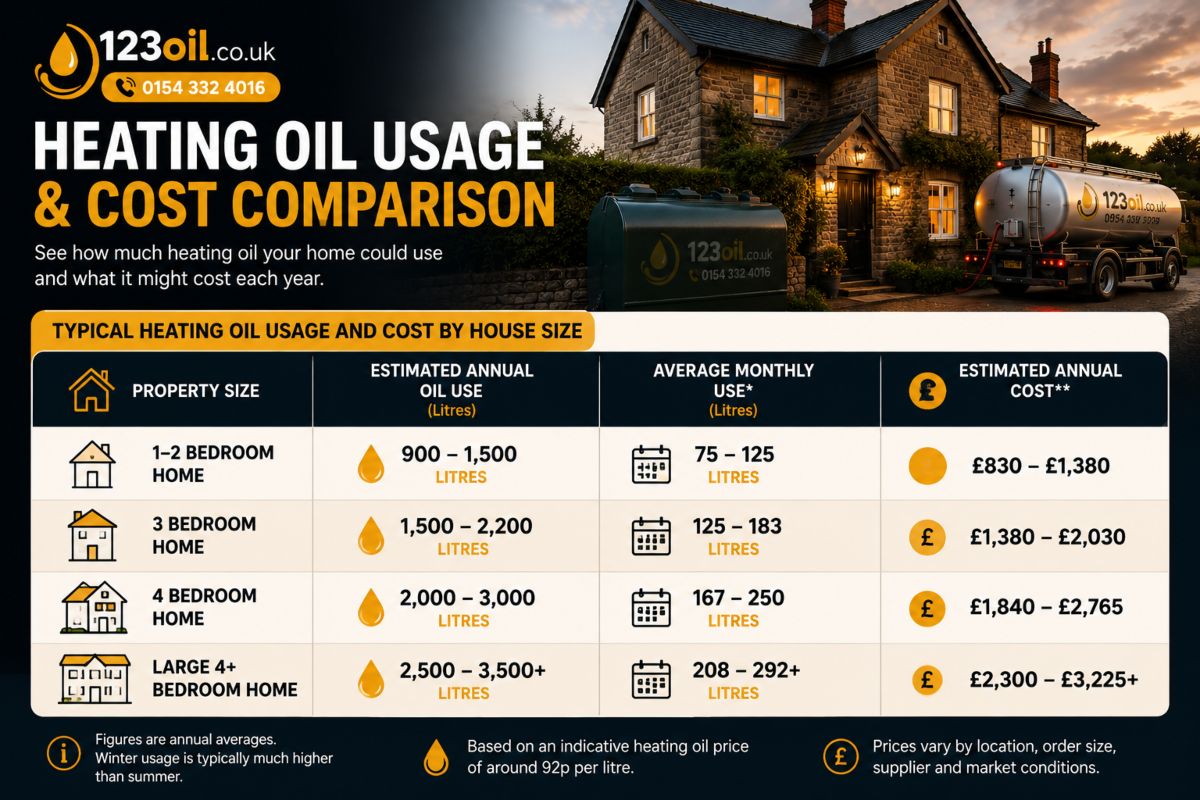
Typical Heating Oil Use by House Size
House size is a useful starting point, but it should be considered alongside insulation quality and the way the property is occupied.
Property Size | Estimated Annual Oil Use | Average Monthly Use | Estimated Annual Cost |
1–2 bedroom home | 900–1,500 litres | 75–125 litres | £830–£1,380 |
3 bedroom home | 1,500–2,200 litres | 125–183 litres | £1,380–£2,030 |
4 bedroom home | 2,000–3,000 litres | 167–250 litres | £1,840–£2,765 |
Large 4+ bedroom home | 2,500–3,500+ litres | 208–292+ litres | £2,300–£3,225+ |
These figures provide a general comparison rather than a fixed household allowance. Heating oil use can vary significantly according to insulation, boiler efficiency, occupancy, outdoor temperature and how often the heating is switched on. Oil prices also change regularly, so cost estimates should be treated as a guide rather than a guaranteed annual bill.
A 2 Bedroom home with good insulation and moderate heating demand may use roughly 900 to 1,500 litres a year. An older cottage of the same size could use more if it has solid walls, draughts or an inefficient boiler.
A 3 Bedroom family home may use approximately 1,500 to 2,200 litres annually, particularly when oil is used for both space heating and hot water. Households where someone is home throughout the day may sit towards the upper end of the range.
A 4 Bedroom detached home may use around 2,000 to 3,000 litres each year. Larger floor areas, high ceilings, older radiators and poor insulation can push consumption higher, while modern glazing and efficient heating controls may reduce it.
These figures are planning estimates rather than guarantees. Reviewing a full year of your own oil deliveries will normally give a much more accurate picture.
How Much Heating Oil Is Used During Winter?
Heating oil use rises sharply during colder weather because the boiler has to work for longer to replace heat lost through walls, roofs, floors and windows. A household that uses very little oil in summer can see its tank level fall much faster between November and February.
Viewed Per Month, consumption is rarely consistent throughout the year. A home may use only a modest amount of oil for hot water during summer but several hundred litres during a cold winter month.
Severe cold, strong winds and longer heating periods can push consumption higher. This is why tank levels should be checked more frequently in winter rather than relying on the same ordering routine all year.
What Affects Heating Oil Consumption?
Property Size and Layout
Larger homes normally need more energy because there is more space to heat. Detached properties can also lose more heat than terraced homes because more external walls are exposed.
High ceilings, extensions, converted lofts and open-plan spaces may further increase heating demand.
Insulation and Draughts
Poor insulation allows warmth to escape quickly, forcing the boiler to run for longer. Loft insulation, wall insulation, modern glazing and effective draught reduction can all help the property retain heat.
Sealing avoidable gaps around doors, windows and loft hatches can also improve comfort without simply turning the thermostat higher.
Boiler Efficiency
An older oil boiler may use more fuel to produce the same amount of useful heat. Modern condensing boilers generally recover more heat from the combustion process, while well-maintained systems are more likely to operate effectively.
Regular servicing can identify worn components, combustion issues and other faults that may affect reliability or efficiency.
Thermostat Settings and Heating Hours
A property kept very warm for long periods will naturally burn more oil. Timers, thermostats and radiator controls can help reduce unnecessary heating when rooms are unoccupied.
The aim is not to make the home uncomfortable. It is to avoid heating rooms more than needed or running the system at full demand when nobody is there.
Number of Occupants
More occupants usually mean more hot-water use, more rooms being used and longer heating periods. A household where people work from home may also consume more oil than one that is empty for most of the working day.
Occupancy can therefore be just as important as bedroom count.
Hot-Water Demand
If the oil boiler also heats domestic hot water, showers, baths and general daily use contribute to fuel consumption. Larger households may continue using a noticeable amount of oil even when central heating is switched off for much of the summer.
How to Calculate Your Own Heating Oil Usage
The easiest method is to review supplier invoices or delivery records from the previous 12 months. Add together the total litres delivered and compare the tank level at the beginning and end of the period.
If the tank was at roughly the same level at both points, your total deliveries provide a useful approximation of annual consumption. If the tank level changed significantly, adjust the figure accordingly.
For more detail, record the tank level every week or month. This allows you to see how quickly oil is being used during cold spells and how low demand becomes in warmer weather.
A smart tank monitor can simplify this process. It can also make sudden changes easier to spot, which may help identify unusual consumption before the tank gets unexpectedly low.
How Long Will 500 Litres of Heating Oil Last?
The answer depends on daily demand. If a household is burning about 10 litres a day during winter, 500 litres would last roughly 50 days. At 15 litres a day, it would last around 33 days.
In mild weather, the same quantity could last much longer because the central heating may be used only occasionally. This is why dividing annual consumption evenly across 12 months does not give a reliable winter forecast.
Use your previous winter records if possible. They show how your own home behaves when outdoor temperatures fall.
How Often Should You Order Heating Oil?
Ordering frequency depends on tank capacity, household usage and the reserve you prefer to keep. Some low-use households may need only one or two substantial deliveries a year, while larger homes may require more regular orders.
Avoid letting the tank run extremely low. Apart from the risk of running out in cold weather, low levels can increase the chance of sediment near the bottom of the tank being drawn towards the fuel line.
Different Heating Oil Suppliers may offer scheduled deliveries, minimum order quantities or tank-monitoring options. Comparing delivery terms as well as price can make managing your fuel supply easier.
If you depend on Nationwide Fuel Delivery, it still makes sense to order before the tank reaches an urgent level. Winter demand and severe weather can make delivery schedules busier.
How Can You Reduce Heating Oil Use?
Use Heating Controls More Efficiently
Set your heating around the times the property is occupied. Programmable thermostats and thermostatic radiator valves can help control when rooms are heated and reduce unnecessary fuel use.
Improve Insulation
Better loft and wall insulation can reduce heat loss and help rooms stay warmer for longer. Even straightforward improvements such as sealing avoidable draughts can reduce the amount of time the boiler needs to run.
Service the Boiler Regularly
Routine servicing helps keep the boiler operating correctly and can identify problems before they cause breakdowns or poor performance. If the boiler is very old, ask a qualified engineer whether replacement could improve efficiency.
Avoid Overheating Rooms
Heating every room to the same high temperature can waste fuel. Spare bedrooms and rarely used spaces may not need as much heat as living areas, provided the property remains adequately protected against damp and freezing.
Check Radiators
Radiators that are cold at the top may contain trapped air. An unbalanced system can also heat some rooms more quickly than others. Correctly functioning radiators help distribute heat more effectively.
Does a Bigger Oil Tank Reduce Consumption?
A larger tank does not directly make the home more energy efficient. Your boiler will still burn the amount of oil needed to meet heating and hot-water demand.
What a larger tank can do is provide greater storage capacity, reduce the frequency of deliveries and give you a bigger reserve during cold periods. For high-use households, that extra flexibility can be useful.
The condition of the tank is more important than size alone. It should be secure, properly supported and checked for signs of damage, leakage or corrosion.
Is Heating Oil Use Higher in Older Houses?
Older homes can use more heating oil because they often have solid walls, larger rooms, older glazing, suspended floors and more draughts. However, age alone does not determine consumption.
A renovated period home with good insulation, modern controls and an efficient boiler may perform much better than an unmodernised property of the same age.
Rather than assuming an older house will always be expensive to heat, look at its actual insulation, heating system and recorded fuel use.
When Should You Refill the Tank?
There is no universal refill point, but ordering before the tank becomes very low is sensible, particularly during winter. Keeping a reasonable buffer reduces the chance of running out during a cold spell or facing an urgent delivery.
The appropriate reorder level depends on tank capacity and daily consumption. A household with high winter demand needs a larger practical reserve than a low-use household.
123 Oil can be considered when arranging heating-oil deliveries, but whichever supplier you choose, regular tank checks and forward planning are the simplest ways to avoid an unexpected shortage.
Conclusion
So, how much heating oil does a house use? For many UK households, around 1,500 to 2,500 litres a year is a useful broad starting point, but actual consumption can be much lower or higher.
House size, insulation, boiler efficiency, thermostat settings, occupancy, weather and hot-water demand all matter. The most accurate method is to review at least 12 months of delivery records and compare how quickly your tank level changes across different seasons.
Once you know your normal usage, you can make better decisions about ordering and energy efficiency. Better controls, improved insulation, sensible temperatures and regular boiler maintenance can all help reduce unnecessary consumption while keeping the home comfortable.
Frequently Asked Questions
Many UK’s oil-heated homes may use around 1,500 to 2,500 litres annually. Smaller efficient properties can use less, while large or poorly insulated homes may use 3,000 litres or more.
Daily usage varies by season. During mild weather it may be very low, while a cold winter day can require considerably more fuel depending on property size, insulation and heating hours.
It can be enough for some smaller or efficient homes, but larger properties may use 1,000 litres before winter ends. Previous winter delivery records are the best guide.
Possible causes include colder weather, longer heating hours, a higher thermostat setting, increased hot-water demand, poor insulation or reduced boiler efficiency. An unexplained change should be investigated.
Use heating timers properly, avoid overheating rooms, improve insulation, reduce draughts and keep the boiler serviced. Regular tank monitoring also helps you identify changes in consumption.
Usually, yes. Lowering unnecessary room temperatures reduces heat demand, although the exact saving depends on the property, heating system and how long the lower setting is maintained.
Order while you still have a sensible reserve rather than waiting until the tank is nearly empty. This is especially important during winter, when usage is higher and delivery demand can increase.