


For many households across the United Kingdom, particularly in rural areas without access to mains gas, heating oil remains an essential fuel source. An oil storage tank is at the centre of this system, ensuring a steady supply of fuel to keep the home warm and running smoothly. When it comes to replacing or installing a tank, the cost of buying a new one can be significant, leading many homeowners to consider purchasing a second-hand oil tank instead.
A used oil tank can be a cost-saving solution, but it is not without risks. Quality, condition, regulatory compliance, lifespan, and safety must all be carefully evaluated to avoid potentially expensive problems later. A poorly maintained tank may lead to leaks, contamination, environmental damage, failed inspections or even heating system breakdowns.
This comprehensive guide explores everything homeowners need to know before buying a second-hand oil tank, including legal considerations, inspection tips, potential hazards, installation requirements, transport advice, and whether the savings truly justify the purchase. By the end, you will be well-prepared to make an informed decision and find the best solution for your home heating needs.
Why Consider Buying a Second-Hand Oil Tank?
A second-hand oil tank can appeal to homeowners for several reasons:
Lower cost
A new tank can be expensive, especially premium plastic or bunded models. Buying used can significantly reduce upfront expenses.
Emergency replacement
If your existing tank has failed unexpectedly, a second-hand unit may provide a quicker, cheaper solution to get your heating back online.
Short-term use
If you plan to move or convert to a different heating system in the near future, a used tank may make sense rather than investing in a long-term installation.
Sustainability
Reusing a tank means one less product entering the waste stream, which may appeal to homeowners seeking an eco-friendly solution.
While the benefits may sound appealing, there are several important considerations to keep in mind before purchasing.
The Risks of Buying a Second-Hand Oil Tank
When buying used, the primary disadvantage is uncertainty. A second-hand tank has an unknown history, and any hidden defect could result in significant costs. Some of the most common risks include:
Ageing materials
Plastic tanks degrade over time, especially when exposed to UV sunlight. Metal tanks may corrode from both internal and external moisture.
Hidden cracks or splits
A tank that looks fine externally may still have structural weaknesses that only become apparent when filled with oil.
Internal contamination
Sludge, water, microbes and rust can build up over the years, affecting boiler performance and damaging fuel pumps or filters.
Regulation non-compliance
Older tanks may not meet current OFTEC, British Standard or environmental regulations. Installing a non-compliant tank could result in fines or the need for expensive upgrades.
Lack of manufacturer’s warranty
A new tank typically comes with a lengthy guarantee, whereas a used one comes with no assurance at all.
Limited lifespan
Even if the tank is currently in good condition, years of previous use could mean that it will need replacing much sooner.
Because of these risks, careful inspection and due diligence are essential, and the following sections explain how to conduct them properly.
Understanding UK Oil Tank Regulations
Before purchasing a second-hand oil tank, homeowners must understand local regulations, which may vary depending on location, proximity to watercourses and the tank’s capacity. In most cases, tanks must comply with:
- OFTEC standards
- BS 5410 regulations
- Building Regulations
- Local planning requirements
One of the most important rules concerns secondary containment. Many homes must now use a bunded oil tank, which means the tank has a built-in protective layer to hold oil in the event of a leak. This is especially required if:
- The tank exceeds 2,500 litres
- It is located near a stream, drain or ditch
- It is within 10 metres of a water source
- It is positioned on unstable ground
Many older second-hand tanks are single-skinned and may not meet these environmental standards. Failing to comply can result in enforcement notices, fines, or the forced removal of the tank at your own expense.
How Long Do Oil Tanks Last?
Average life expectancy varies depending on materials:
Plastic/polyethene tanks
Usually around 15–20 years. However, UV exposure, extreme weather and installation quality can reduce this lifespan.
Steel tanks
Generally, it lasts 10–15 years before corrosion becomes a concern, especially if maintenance is poor or sludge buildup has occurred.
A second-hand tank may already be near the end of its useful life, so it is crucial to know its age before buying. If the seller cannot confirm the manufacturing date, approach with caution.
Questions to Ask Before Purchasing
Before agreeing to buy a second-hand oil tank, ask the seller the following:
- How old is the tank?
- What is its capacity?
- Is it bundled or single-skinned?
- Why is it being sold?
- Has it ever leaked?
- Was it stored indoors or outdoors?
- Can I inspect it before buying?
- Does it comply with current UK regulations?
- Has it been pressure-tested recently?
If the seller is unwilling to provide information, it may be best to look elsewhere.
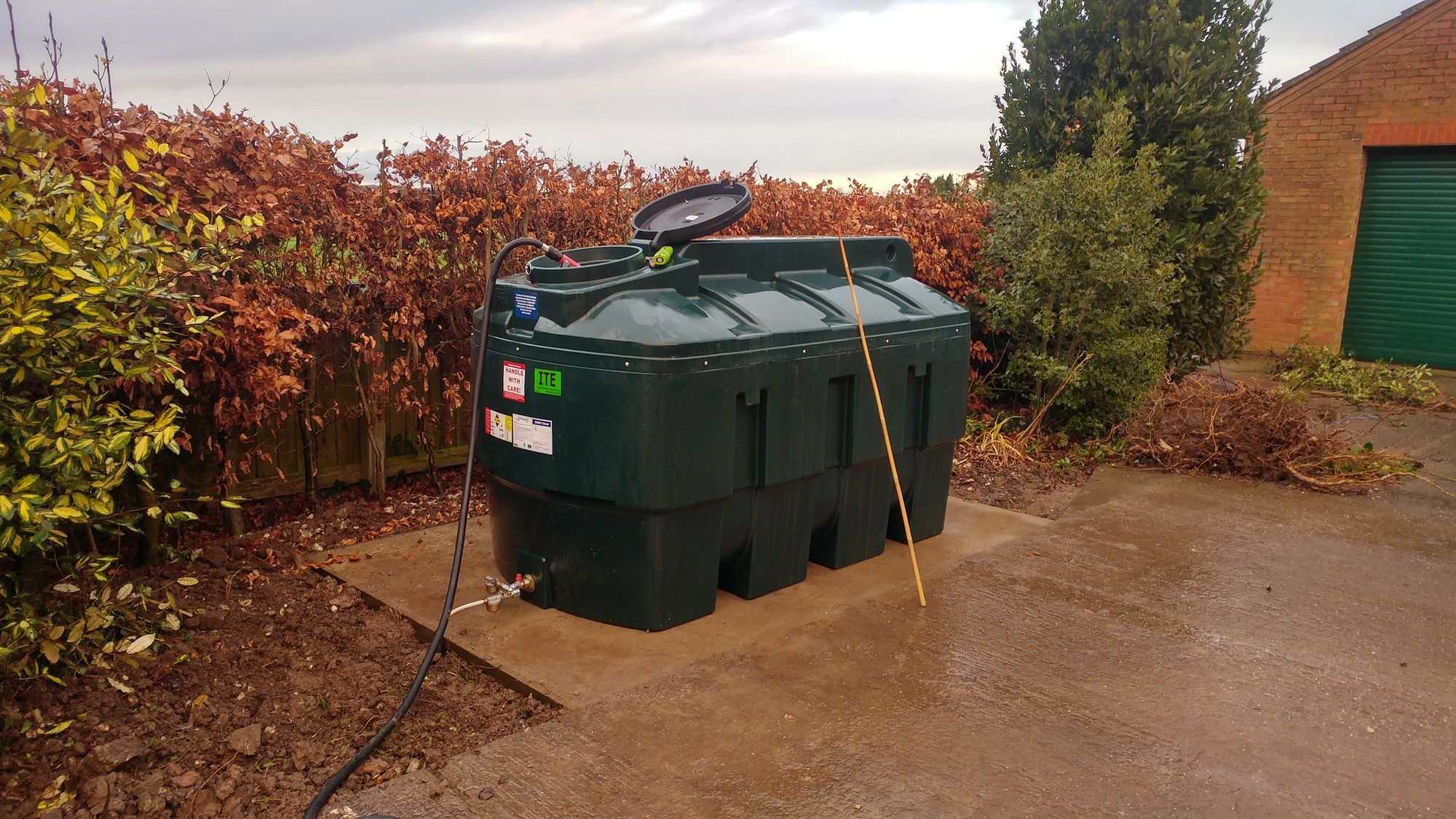
What to Look for When Inspecting a Second-Hand Oil Tank
A physical inspection is essential, and the following areas should be checked closely:
Cracks, distortion or sun damage
Particularly on plastic tanks, UV exposure can weaken the material. Any warping or visible cracking is a serious warning sign.
Corrosion
On steel tanks, rust around weld seams, tap bases, or the bottom of the tank indicates internal degradation.
Base stability
A tank sitting unevenly could develop stress fractures or leaks once refilled.
Signs of past repairs
Patch welding, silicone, tape or “quick fixes” suggest previous leaks and likely future problems.
Discolouration around fittings
This can indicate slow seepage or sweating of heating oil.
Condition of the outlet valve
If the valve is stiff, corroded or damaged, replacing it may be necessary.
Internal sludge
If possible, inspect the inside with a torch. Sludge buildup can allow contamination to enter your heating system.
Support legs and frame integrity
Metal tanks may sit on welded support legs that can rust and weaken.
Compliance plates or labels
Most modern tanks include manufacturer approval details, which help verify age and certification.
If any of these issues are present, reconsider the purchase or negotiate a lower price to include repair costs.
Should a Second-Hand Tank Be Pressure Tested?
Yes. A pressure test is highly recommended to simulate real-world conditions and ensure the tank is leak-free and structurally sound. Some installers and fuel suppliers offer tank testing services, and a written pass certificate is extremely useful for insurance and peace of mind.
Transporting a Used Oil Tank
Once purchased, the tank must be transported safely. Tanks that previously held oil may still contain residue, so transporting them incorrectly can be illegal. Keep in mind:
- Ensure the tank is empty before moving.
- Secure the tank upright on a trailer or vehicle using straps.
- Avoid allowing the tank to flex during transport.
- Never transport a tank containing oil without complying with ADR (Carriage of Dangerous Goods) regulations.
Lifting a tank onto or off a vehicle requires proper handling to avoid cracks or deformation.
Where Can You Install a Second-Hand Oil Tank?
Even if the tank itself is in good condition, correct installation is critical. UK regulations require that the tank:
- Sits on a solid, stable, non-combustible base
- It is positioned at least 1.8 metres away from openings such as windows
- Is 760mm or more from boundaries or combustible materials
- Has adequate fire protection, depending on the location
If installed incorrectly, you may face:
- Safety hazards
- Failed inspections
- Potential home insurance issues
For these reasons, many homeowners choose professional installation rather than a DIY approach.
Bunded vs. Single-Skinned: Which Should You Choose?
Most modern properties are now required to install bunded tanks due to environmental protection standards. Here is a quick comparison:
Bunded Tanks
- Double-layer design
- Protects soil and waterways from spillages
- Usually required under current regulations
- Higher upfront cost but greater peace of mind
Single-Skinned Tanks
- Cheaper to purchase
- Suitable only in low-risk areas
- Offers no secondary containment
- Increasingly non-compliant in many areas
If the second-hand tank is single-skinned and your property requires bunding, the installation will not pass inspection.
Can You Insure a Second-Hand Oil Tank?
Some insurers may refuse cover for ageing or undocumented tanks. Before installing a used tank, check with your insurer regarding:
- Tank age limits
- Inspection requirements
- OFTEC certification
- Bunding needs
- Evidence of testing
If the tank cannot be insured, a cheaper purchase may become an expensive liability.
Should You Buy a Used Plastic or Steel Oil Tank?
Both materials have strengths and weaknesses:
Plastic Tanks Pros
- Rust-free
- Lightweight
- Longer lifespan in many cases
- Requires less maintenance
Plastic Tanks Cons
- It can weaken in direct sunlight
- Susceptible to cracking over time
- Repairs are often not permitted
Steel Tanks Pros
- Very strong when well-built
- Can be refurbished or welded
- Heat resistant
Steel Tanks Cons
- Vulnerable to corrosion
- Can rust from the inside out
- May contaminate oil with flakes
In general, if buying used, a modern plastic bunded tank in excellent condition is often the safer choice.
Is Buying a Second-Hand Oil Tank Worth It?
A second-hand tank can be a smart purchase under the right circumstances:
- The tank is relatively new
- It passes full inspection
- It meets modern regulations
- It has been pressure tested
- You have documentation confirming the condition
However, it is rarely worth buying:
- Rusted tanks
- Repaired tanks
- Tanks without certification
- Tanks older than 15 years
- Single-skinned tanks in high-risk locations
If you calculate the combined cost of:
- Purchase
- Transport
- Installation
- Possible repairs
- A shortened lifespan
A used tank may not always save money in the long term.
Professional Evaluation Can Save You Money
If you are unsure about the condition of a second-hand tank, hiring an OFTEC-registered technician to inspect it is often a wise investment. They may identify structural issues that the untrained eye could miss, preventing expensive mistakes later.
123 Oil can help homeowners select and install the safest, most reliable tank for their needs.
Final Thoughts
Buying a second-hand oil tank can be a sensible solution for homeowners looking to save money, access a quick replacement, or avoid waste. However, it requires careful consideration, inspection and understanding of UK heating oil regulations to avoid costly issues. With proper due diligence, a used tank can function safely and reliably, but cutting corners can lead to environmental damage, fines, uninsurable systems and expensive repairs.
When deciding whether to buy a used tank, weigh the initial savings against the potential risks. If the tank is well-maintained, newer, compliant and professionally inspected, it may offer years of dependable service. If not, investing in a new, fully approved and warrantied tank may provide far better value and peace of mind in the long run.
Frequently Asked Questions
Yes, it can be safe if the tank is thoroughly inspected for cracks, corrosion, and leaks, complies with OFTEC regulations, and is installed by a qualified professional.
A used tank may last anywhere from 5 to 15 years, depending on its age, condition, maintenance history and whether it is made from plastic or steel.
Always check for rust, bulging, previous repair marks, base damage, certification history, date of manufacture and whether it meets current legislation and capacity requirements.
Yes, all oil tank installations must comply with relevant UK building and environmental regulations, so professional installation is required to ensure safety and legal compliance.
Yes, you can relocate a tank, but it should be fully emptied, cleaned, inspected for weaknesses and reinstalled using proper fire-clearance distances and a solid base.