


Oil tank regulations in the UK changed significantly in September 2001, when new Building Regulations introduced stricter rules for installation and safety. These included safe distance requirements, fire protection, proper bases, and the use of bunded tanks in sensitive areas. Since then, regulations have continued tightening to prevent environmental damage, leaks, and pollution, making modern oil tank compliance essential for homeowners and landlords.
Oil storage tanks have long been a vital part of properties that are not connected to the mains gas network, particularly in rural areas across the UK. They provide heating and hot water through stored heating oil. However, over the years, concerns around environmental damage, fire risk, water contamination and soil pollution have led to the introduction of stricter regulations. Many people now find themselves asking a very important question: when did oil tank regulations change, and how do those changes affect me today?
This detailed guide will walk you through the history of oil tank regulations in the UK, why they were introduced, how they’ve evolved, and what the current standards mean for property owners. Whether you are a homeowner, landlord, buyer or installer, understanding these rules could save you from fines, costly repairs, and environmental damage.
A brief history of oil tank use in the UK
Oil tanks became widely used in the mid to late 20th century, particularly in countryside homes, farms, and older buildings located away from main gas supplies. In the early years, there were very few enforceable standards for installing or maintaining oil tanks. Many were simple, single-skinned metal tanks, located either indoors or outdoors, with minimal protection.
As time passed, it became clear that leaks, corrosion, and poor installations were causing serious environmental issues. Heating oil contains harmful hydrocarbons that can contaminate soil, groundwater, rivers and nearby watercourses. Cleaning up such pollution is extremely expensive and can even reduce a property’s value. This is when regulatory bodies began to step in.
The first significant changes – late 1990s to early 2000s
The most notable changes to oil tank regulations in England and Wales began in September 2001 when new requirements were introduced under Approved Document J of the Building Regulations. This was one of the most important moments in UK oil tank history.
The aim was simple: to prevent fires and environmental contamination by improving the installation of oil tanks.
From 2001 onwards, new installations had to comply with rules such as:
- Minimum distances from buildings, boundaries and watercourses
- Fire protection measures for tanks located near structures
- Proper bases to support the weight of a full tank
- Adequate bunding (secondary containment) where needed
- Use of approved materials and competent installers
This meant that any oil tank installed after September 2001 had to meet higher safety and environmental standards compared to older tanks.
In Scotland, similar rules were introduced slightly later in 2006 under the Building (Scotland) Regulations, while Northern Ireland also followed with updated guidelines based on environmental protection.
Introduction of bunded tanks – a major turning point
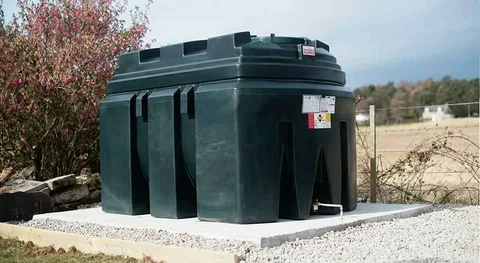
The biggest development in oil tank regulations was the wider requirement for bunded oil tanks. A bunded tank is a tank within a protective outer layer, designed to contain any leaks from the inner tank. Think of it as a tank within a tank. This extra layer helps prevent oil from leaking into the environment if the inner tank fails.
The push for bunded tanks mainly happened in the early to mid-2000s, especially in environmentally sensitive areas such as:
- Near rivers, lakes and streams
- Within groundwater protection zones
- Close to drains or boreholes
- Within 50 metres of a water source
- Where a leak could cause significant environmental damage
Even when not legally required in some areas, bunded tanks soon became the recommended best practice for safety and compliance. Today, many insurers and local councils strongly prefer or even insist on bunded tanks for new installations or replacements.
How regulations continued evolving in the 2010s
As technology improved and environmental awareness increased, oil tank standards continued to shift. By the 2010s, there was far more emphasis on:
- Preventing accidental spills during filling
- Using corrosion-resistant materials such as polyethene
- Improving inspection standards
- Setting stricter guidelines for installers
- Replacing old, single-skinned steel tanks
Local authorities also became more active in enforcing rules. Properties that suffered oil leaks were legally responsible for any cleanup costs, which can easily run into tens of thousands of pounds.
Mortgage lenders and insurance companies began taking oil tank compliance far more seriously as well. Buyers began to request oil tank surveys as part of the purchase process. An old, non-compliant tank could delay or even stop a property sale.
It was during this time that many homeowners began turning to specialist suppliers and installers, such as 123 Oil, for safer storage solutions and professional guidance on compliance.
When did oil tank regulations change for landlords?
If you’re a landlord, oil tank regulations matter even more. You have a legal responsibility to provide safe heating systems for your tenants and to ensure that your property does not pose an environmental risk.
Over the past decade, landlords have faced increased pressure to:
- Regularly inspect oil tanks for corrosion or leaks
- Ensure tanks are structurally sound and stable
- Comply with current installation distances and safety standards
- Replace old tanks that are at risk of failure
- Use qualified engineers for maintenance
While there isn’t one single date when “landlord-specific” oil tank regulations changed, the tightening of environmental laws, combined with housing safety standards, means that landlords now have more responsibility than ever before.
Failing to comply could lead to prosecution, invalid insurance, or claims from tenants.
The impact of environmental regulations
Another major influence on oil tank regulations has been environmental legislation. The Environmental Protection Act and various water protection laws have strengthened over the years. Local Environment Agencies are now far more vigilant about pollution caused by leaking tanks.
If your oil tank contaminates nearby land or water, you are legally responsible, even if the spill was accidental. This is why the regulations now focus so heavily on prevention rather than reaction.
In practical terms, this means:
- Oil tanks should be positioned away from drains and water sources
- Tanks must sit on non-combustible, stable bases
- Tanks must be protected from vehicle impact
- Pipework must be properly supported and clearly identifiable
- Old or rusty tanks must be removed responsibly
The introduction of tougher environmental policies in the 2010s and 2020s also encouraged communities to switch to cleaner alternatives, but heating oil remains essential in many rural areas.
How do you know if your tank is compliant?
If your oil tank was installed before 2001, it is likely not up to modern standards. However, that does not automatically mean it is illegal. It becomes an issue if:
- You are replacing it
- Making significant changes to the property
- Selling your home
- Experiencing a leak or failure
A professional inspection can reveal whether your tank meets current best practice. They will check:
- Distance from buildings and boundaries
- Type of material used (steel or plastic)
- Signs of rust, bulging or cracking
- Quality of the base and supports
- Adequacy of secondary containment (bunding)
If your tank is non-compliant, upgrading is often the safest and, in the long term, cheapest option.
Planning permission and oil tanks
One common question is whether you need planning permission for an oil tank. In many cases, a like-for-like replacement does not require permission. However, you may need approval if:
- The tank is significantly larger
- The tank location has changed
- The property is listed
- The property is in a conservation area
Building regulations approval is also commonly required, especially for new installations.
Always check with your local authority before installing or moving a tank, as rules can vary depending on location.
The modern standard for oil tanks in the UK
So, when did oil tank regulations change to what we consider the modern standard? In simple terms, the key change happened in 2001, but the recommendations and enforcement became stronger from 2006 onwards. Since then, the best practice has shifted toward:
- Bunded oil tanks as standard
- Professional installation by registered technicians
- Annual or regular inspections
- Strict environmental risk assessments
- Replacement of old tanks every 15 to 25 years
Today, a modern compliant oil tank should be:
- Made from durable, corrosion-resistant material
- Bunded for extra protection
- Installed on a fire-resistant base
- Positioned safely away from buildings and drains
- Fitted with proper alarms and safety valves
These modern regulations are aimed at protecting homes, people, and the natural environment.
The future of oil tank regulations
With the UK’s focus on net-zero targets and carbon emissions reductions, the future of oil heating is evolving. Although oil tanks are still legal and necessary for many properties, the government is encouraging homeowners to move towards greener alternatives such as heat pumps and biofuel systems.
We may see further changes in oil tank regulations as:
- More restrictions are placed on fossil fuels
- Cleaner alternatives become more affordable
- Environmental requirements tighten
- Property standards continue to rise
For now, staying compliant means not only following today’s regulations but also planning for future upgrades.
Final thoughts
Understanding when oil tank regulations changed is more than a historical question, it directly affects your safety, finances and environmental responsibility. The major turning point in the UK came in September 2001, but changes have continued shaping the industry ever since.
If you currently have an oil tank, the smartest step is to have it professionally checked. This small action can save you from severe damage, legal problems and unnecessary expenses.
Frequently Asked Questions
The main change happened in September 2001 when Building Regulations (Approved Document J) introduced new safety and environmental standards for oil tank installations.
No, old tanks are not automatically illegal. However, if they pose a risk, leak, or fail to meet modern standards, they may need to be upgraded or replaced.
In many areas, especially near water sources or buildings, bunded tanks are required or strongly recommended for environmental protection.
Yes. Landlords are responsible for maintaining safe, compliant oil tanks and can face legal action if leaks or hazards occur.
Most oil tanks should be replaced every 15–25 years, depending on material, condition and maintenance.