


An oil tank should be placed on a flat, non-combustible base at a safe distance from buildings, heat sources and boundaries. In the UK, tanks must be located at least 1.8 metres away from houses, doors and windows, and 760mm from fences or boundaries. It should also be positioned away from drains, streams and flood-prone areas while remaining accessible for safe fuel deliveries.
For thousands of homes across the UK, heating oil remains a vital source of warmth and hot water. In rural and semi-rural areas, where mains gas is unavailable, an oil tank is an essential part of daily life. However, one question that many homeowners either overlook or underestimate is: where should an oil tank be placed?
The position of an oil tank is not just a matter of convenience or space. It directly affects safety, legal compliance, efficiency, maintenance costs and even your home insurance. Placing a tank in the wrong location can pose serious fire risks, cause environmental contamination, damage nearby structures, and result in expensive fines or forced relocation by local authorities.
This detailed guide explains where an oil tank should be placed in the UK, taking into account regulations and practical considerations. If you are installing a new tank, replacing an old one, or simply checking that your current setup is safe, this article will give you everything you need to know.
Why the correct placement of an oil tank matters
An oil tank holds a large volume of flammable liquid. If there is a leak, overflow or fire, the consequences can be severe. Correct placement minimises these risks while also making your system easier to access and maintain.
When an oil tank is positioned properly, it helps to:
- Reduce the risk of fire or heat damage
- Prevent oil leaks from entering drains or soil
- Keep your property within legal regulations
- Allow safe access for deliveries
- Improve boiler performance
- Prevent costly relocation or replacement
Incorrect placement, on the other hand, can lead to:
- Environmental pollution
- Water contamination
- Fines from local authorities
- Invalid home insurance cover
- Damage to buildings and foundations
That’s why understanding tank positioning rules and best practices is essential before installation.
General rules for oil tank placement in the UK
In the UK, oil tank installations are governed by building regulations and fire safety guidance, particularly OFTEC (the Oil Firing Technical Association) standards. These rules focus on putting safe distances between the tank and potential hazards.
As a general guide, an oil tank should be placed:
- A minimum of 1.8 metres away from non-fire-rated buildings such as sheds or garages
- At least 1.8 metres away from openings such as windows and doors
- A minimum of 1.8 metres from oil-fired appliances or flue terminals
- At least 760mm (0.76m) away from boundaries, fences and hedges
- At least 10 metres from streams, rivers or open drains
- On a flat, stable and non-combustible base
- In a position where it can be safely accessed for delivery and maintenance
If these distances cannot be achieved, a fire-resistant barrier with the correct rating may be required.
Should an oil tank be placed above ground or underground?
Most domestic oil tanks in the UK are installed above ground because they are:
- Easier to inspect
- More affordable to install
- Simpler to maintain
- Safer in terms of leak detection
An above-ground tank allows you to check visually:
- Cracks or splits
- Rust or corrosion
- Bulging walls
- Leaking seams
- Overgrown vegetation around the base
Underground tanks may be used in rare circumstances, but they:
- They are more expensive to install
- They are harder to monitor for leaks
- Require specialist equipment
- Need more regular professional inspections
For safety and practicality, an above-ground installation is usually the best option for residential properties.
Best places around your property for oil tank installation
Although specific layouts vary from home to home, several common locations work well as long as they meet legal distance requirements.
- The most suitable places for an oil tank are usually:
- A clear area in the rear garden, away from buildings
- A side garden with open access for tanker delivery
- Along a boundary wall that is at a safe distance
- On a level space close enough to the boiler but not too close to the house
- An area that is easily visible for inspection
Wherever it is placed, the oil tanker’s hose must be able to reach the filling point without causing risk or obstruction.
Where you should never place an oil tank
Some locations are extremely dangerous or illegal for oil tank installation.
You should never place an oil tank:
- Inside your home
- Underneath a building
- Directly beside a boiler or heat source
- In a flood-prone area
- On an unstable slope or soft ground
- Near open drains or water sources
- In a position that blocks exits or access points
- Directly against a wooden fence or shed
These placements significantly increase the risk of fire, spillage, structural damage and legal non-compliance.
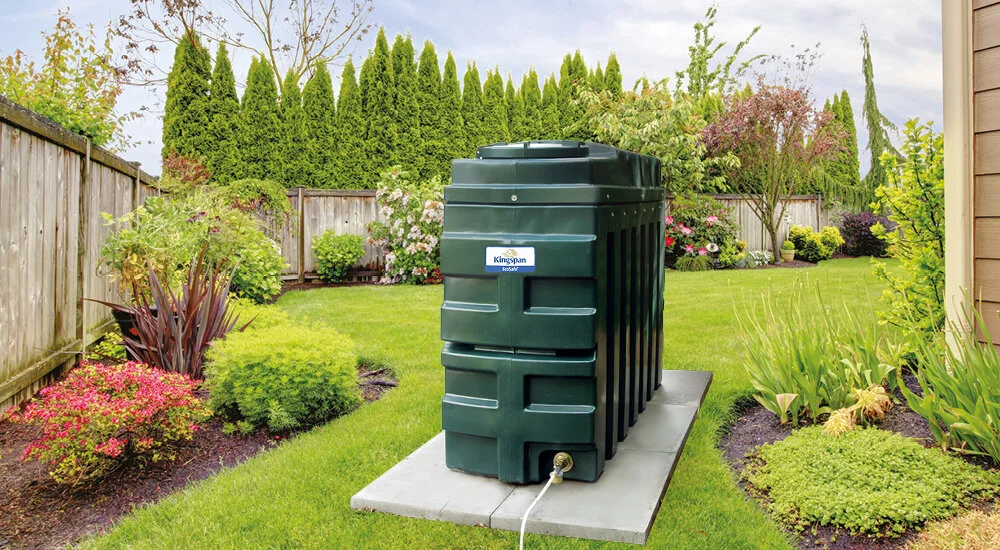
The importance of a proper tank base
An oil tank is very heavy when full. For example, a 1,000-litre tank can weigh over a tonne. Because of this, the base must be strong, level and non-combustible.
Suitable base materials include:
- Concrete slabs
- Paving slabs on a concrete foundation
- Solid brick plinths
Purpose-built tank bases
The base should extend at least 300mm beyond all sides of the tank. This provides extra stability and protection for the underlying ground.
Failure to use a suitable base can cause:
- Tank tilting
- Structural cracking
- Uneven oil pressure
- Eventual collapse
This could result in a major oil leak and environmental harm.
How location affects oil delivery
Tank placement should always take delivery access into account. Oil delivery lorries use long hoses, but in most cases their reach is limited to around 20–30 metres.
The tank should be placed:
- Within easy reach of the driveway or roadside
- In clear view of the delivery driver
- Without obstacles such as locked gates or fences
- Away from low roofs, wires or tree branches
A tank that is difficult to access may result in:
- Extra delivery charges
- Cancelled deliveries
- Safety concerns for drivers
Planning tank placement for easy access saves both time and money in the long term. Some homeowners even choose 123 Oil to ensure smooth and safe deliveries.
Environmental considerations when placing an oil tank
Oil leaks are a serious environmental risk. Just a small spill can contaminate large volumes of soil and groundwater.
To protect the environment, your tank should be:
- Away from ponds and streams
- Positioned so any leak flows away from buildings
- Installed with a drip tray or bunded design
- Checked regularly for signs of wear
In sensitive areas, a bunded tank (double-skinned tank) is often required. This provides a second layer of protection by trapping leaks in an outer shell.
The impact on your home insurance
Many homeowners are unaware that improper oil tank placement can invalidate their home insurance policy. If a fire or leak occurs and the tank was not installed in accordance with regulations, insurers may refuse to pay out.
To stay protected:
- Always use a professional installer
- Follow OFTEC guidelines
- Keep installation paperwork
- Schedule regular inspections
- Document any maintenance
This not only protects your home but also provides peace of mind in case of an emergency.
Can you move an existing oil tank?
Yes, an oil tank can be relocated, but only by a professional. Attempting to move a tank yourself is extremely dangerous and illegal in most cases.
Tank relocation often includes:
- Emptying any remaining oil
- Safely disconnecting the pipework
- Preparing a new concrete base
- Installing a new fuel line
- Pressure testing the system
Although relocation costs money, it is much cheaper than dealing with environmental cleanup or legal penalties resulting from poor placement.
Signs that your oil tank is in the wrong position
You may already have an oil tank on your property, but how do you know if it’s placed correctly?
Warning signs include:
- Tank is very close to a window or door
- Positioned next to a wooden fence or shed
- Base is uneven or sunken
- Oil smell near the tank
- Cracks in the tank or base
- No visible safety barrier
If you notice any of these, it is advisable to have your tank inspected by a professional as soon as possible.
Final thoughts
When deciding where to place an oil tank, convenience should never outweigh safety. While it may be tempting to put it in the closet or the most hidden spot, proper placement protects your home, your family, the environment, and your finances.
To summarise, your oil tank should be:
- Installed on a strong, non-combustible base
- Positioned away from buildings and heat sources
- Easily accessible for delivery and maintenance
- Far from water sources and drains
- Compliant with UK safety regulations
By planning carefully and following best practice, you ensure that your heating system remains safe, efficient and reliable for years to come.
Frequently Asked Questions
An oil tank should be at least 1.8 metres away from your house, windows, doors and other non-fire-rated structures to reduce fire risk.
No, it must be at least 760mm (0.76 metres) away from boundaries or fences unless a fire-rated barrier is installed.
It is usually better to place it in the back or side garden, away from heat sources and visible access points, while still allowing safe delivery access.
Yes, an oil tank must sit on a non-combustible and level base, such as a concrete slab or paving on a concrete foundation.
No, gravel or soil is not suitable. These surfaces can shift over time, increasing the risk of tank movement, cracking, or leaks.